 Add to Chrome
 Add to Firefox
 Add to Edge
SafeMed-R1: Clinician-Audited Safety and Ethics Alignment for Medical Large Language Models
May 27, 2026
Large language models(LLMs) increasingly match expert performance on licensing examinations, yet routine clinical use remains limited because governance requires auditable reasoning, safety and ethics alignment, and resilience to adversarial misuse. Here we present SafeMed-R1, trained with a traceable Clinical Trust Signals(CTS) pipeline that links each reasoning instance to clinician rubric scores and edit histories, and aligned through safety and ethics supervision and red team stress testing. SafeMed-R1 attains a macro-averaged accuracy of 79.6% across clinical benchmarks. Under adversarial safety testing, it shows the lowest aggregated risk and reduces unsafe outputs by about 3 to 5% relative to its baseline. In a paired expert study of 30 medication safety vignettes, SafeMed-R1 matches PGY1 and PGY2 residents on medical correctness and scores higher for medication safety, guideline consistency, and clinical usefulness. Collectively, these results suggest that clinician-audited supervision provenance, together with domain-tailored safety and ethics alignment, can strengthen governance-relevant evidence without relying on inference-time retrieval or citation grounding.

MedProbeBench: Systematic Benchmarking at Deep Evidence Integration for Expert-level Medical Guideline
Apr 20, 2026Recent advances in deep research systems enable large language models to retrieve, synthesize, and reason over large-scale external knowledge. In medicine, developing clinical guidelines critically depends on such deep evidence integration. However, existing benchmarks fail to evaluate this capability in realistic workflows requiring multi-step evidence integration and expert-level judgment. To address this gap, we introduce MedProbeBench, the first benchmark leveraging high-quality clinical guidelines as expert-level references. Medical guidelines, with their rigorous standards in neutrality and verifiability, represent the pinnacle of medical expertise and pose substantial challenges for deep research agents. For evaluation, we propose MedProbe-Eval, a comprehensive evaluation framework featuring: (1) Holistic Rubrics with 1,200+ task-adaptive rubric criteria for comprehensive quality assessment, and (2) Fine-grained Evidence Verification for rigorous validation of evidence precision, grounded in 5,130+ atomic claims. Evaluation of 17 LLMs and deep research agents reveals critical gaps in evidence integration and guideline generation, underscoring the substantial distance between current capabilities and expert-level clinical guideline development. Project: https://github.com/uni-medical/MedProbeBench
MMRareBench: A Rare-Disease Multimodal and Multi-Image Medical Benchmark
Apr 12, 2026Multimodal large language models (MLLMs) have advanced clinical tasks for common conditions, but their performance on rare diseases remains largely untested. In rare-disease scenarios, clinicians often lack prior clinical knowledge, forcing them to rely strictly on case-level evidence for clinical judgments. Existing benchmarks predominantly evaluate common-condition, single-image settings, leaving multimodal and multi-image evidence integration under rare-disease data scarcity systematically unevaluated. We introduce MMRareBench, to our knowledge the first rare-disease benchmark jointly evaluating multimodal and multi-image clinical capability across four workflow-aligned tracks: diagnosis, treatment planning, cross-image evidence alignment, and examination suggestion. The benchmark comprises 1,756 question-answer pairs with 7,958 associated medical images curated from PMC case reports, with Orphanet-anchored ontology alignment, track-specific leakage control, evidence-grounded annotations, and a two-level evaluation protocol. A systematic evaluation of 23 MLLMs reveals fragmented capability profiles and universally low treatment-planning performance, with medical-domain models trailing general-purpose MLLMs substantially on multi-image tracks despite competitive diagnostic scores. These patterns are consistent with a capacity dilution effect: medical fine-tuning can narrow the diagnostic gap but may erode the compositional multi-image capability that rare-disease evidence integration demands.
Project Imaging-X: A Survey of 1000+ Open-Access Medical Imaging Datasets for Foundation Model Development
Mar 29, 2026Foundation models have demonstrated remarkable success across diverse domains and tasks, primarily due to the thrive of large-scale, diverse, and high-quality datasets. However, in the field of medical imaging, the curation and assembling of such medical datasets are highly challenging due to the reliance on clinical expertise and strict ethical and privacy constraints, resulting in a scarcity of large-scale unified medical datasets and hindering the development of powerful medical foundation models. In this work, we present the largest survey to date of medical image datasets, covering over 1,000 open-access datasets with a systematic catalog of their modalities, tasks, anatomies, annotations, limitations, and potential for integration. Our analysis exposes a landscape that is modest in scale, fragmented across narrowly scoped tasks, and unevenly distributed across organs and modalities, which in turn limits the utility of existing medical image datasets for developing versatile and robust medical foundation models. To turn fragmentation into scale, we propose a metadata-driven fusion paradigm (MDFP) that integrates public datasets with shared modalities or tasks, thereby transforming multiple small data silos into larger, more coherent resources. Building on MDFP, we release an interactive discovery portal that enables end-to-end, automated medical image dataset integration, and compile all surveyed datasets into a unified, structured table that clearly summarizes their key characteristics and provides reference links, offering the community an accessible and comprehensive repository. By charting the current terrain and offering a principled path to dataset consolidation, our survey provides a practical roadmap for scaling medical imaging corpora, supporting faster data discovery, more principled dataset creation, and more capable medical foundation models.
MedQ-Deg: A Multidimensional Benchmark for Evaluating MLLMs Across Medical Image Quality Degradations
Mar 08, 2026Despite impressive performance on standard benchmarks, multimodal large language models (MLLMs) face critical challenges in real-world clinical environments where medical images inevitably suffer various quality degradations. Existing benchmarks exhibit two key limitations: (1) absence of large-scale, multidimensional assessment across medical image quality gradients and (2) no systematic confidence calibration analysis. To address these gaps, we present MedQ-Deg, a comprehensive benchmark for evaluating medical MLLMs under image quality degradations. MedQ-Deg provides multi-dimensional evaluation spanning 18 distinct degradation types, 30 fine-grained capability dimensions, and 7 imaging modalities, with 24,894 question-answer pairs. Each degradation is implemented at 3 severity degrees, calibrated by expert radiologists. We further introduce Calibration Shift metric, which quantifies the gap between a model's perceived confidence and actual performance to assess metacognitive reliability under degradation. Our comprehensive evaluation of 40 mainstream MLLMs reveals several critical findings: (1) overall model performance degrades systematically as degradation severity increases, (2) models universally exhibit the AI Dunning-Kruger Effect, maintaining inappropriately high confidence despite severe accuracy collapse, and (3) models display markedly differentiated behavioral patterns across capability dimensions, imaging modalities, and degradation types. We hope MedQ-Deg drives progress toward medical MLLMs that are robust and trustworthy in real clinical practice.
Training-Free Acceleration for Document Parsing Vision-Language Model with Hierarchical Speculative Decoding
Feb 13, 2026Document parsing is a fundamental task in multimodal understanding, supporting a wide range of downstream applications such as information extraction and intelligent document analysis. Benefiting from strong semantic modeling and robust generalization, VLM-based end-to-end approaches have emerged as the mainstream paradigm in recent years. However, these models often suffer from substantial inference latency, as they must auto-regressively generate long token sequences when processing long-form documents. In this work, motivated by the extremely long outputs and complex layout structures commonly found in document parsing, we propose a training-free and highly efficient acceleration method. Inspired by speculative decoding, we employ a lightweight document parsing pipeline as a draft model to predict batches of future tokens, while the more accurate VLM verifies these draft predictions in parallel. Moreover, we further exploit the layout-structured nature of documents by partitioning each page into independent regions, enabling parallel decoding of each region using the same draft-verify strategy. The final predictions are then assembled according to the natural reading order. Experimental results demonstrate the effectiveness of our approach: on the general-purpose OmniDocBench, our method provides a 2.42x lossless acceleration for the dots.ocr model, and achieves up to 4.89x acceleration on long-document parsing tasks. We will release our code to facilitate reproducibility and future research.
TCM-5CEval: Extended Deep Evaluation Benchmark for LLM's Comprehensive Clinical Research Competence in Traditional Chinese Medicine
Nov 17, 2025Large language models (LLMs) have demonstrated exceptional capabilities in general domains, yet their application in highly specialized and culturally-rich fields like Traditional Chinese Medicine (TCM) requires rigorous and nuanced evaluation. Building upon prior foundational work such as TCM-3CEval, which highlighted systemic knowledge gaps and the importance of cultural-contextual alignment, we introduce TCM-5CEval, a more granular and comprehensive benchmark. TCM-5CEval is designed to assess LLMs across five critical dimensions: (1) Core Knowledge (TCM-Exam), (2) Classical Literacy (TCM-LitQA), (3) Clinical Decision-making (TCM-MRCD), (4) Chinese Materia Medica (TCM-CMM), and (5) Clinical Non-pharmacological Therapy (TCM-ClinNPT). We conducted a thorough evaluation of fifteen prominent LLMs, revealing significant performance disparities and identifying top-performing models like deepseek\_r1 and gemini\_2\_5\_pro. Our findings show that while models exhibit proficiency in recalling foundational knowledge, they struggle with the interpretative complexities of classical texts. Critically, permutation-based consistency testing reveals widespread fragilities in model inference. All evaluated models, including the highest-scoring ones, displayed a substantial performance degradation when faced with varied question option ordering, indicating a pervasive sensitivity to positional bias and a lack of robust understanding. TCM-5CEval not only provides a more detailed diagnostic tool for LLM capabilities in TCM but aldso exposes fundamental weaknesses in their reasoning stability. To promote further research and standardized comparison, TCM-5CEval has been uploaded to the Medbench platform, joining its predecessor in the "In-depth Challenge for Comprehensive TCM Abilities" special track.
Can Large Language Models Function as Qualified Pediatricians? A Systematic Evaluation in Real-World Clinical Contexts
Nov 17, 2025With the rapid rise of large language models (LLMs) in medicine, a key question is whether they can function as competent pediatricians in real-world clinical settings. We developed PEDIASBench, a systematic evaluation framework centered on a knowledge-system framework and tailored to realistic clinical environments. PEDIASBench assesses LLMs across three dimensions: application of basic knowledge, dynamic diagnosis and treatment capability, and pediatric medical safety and medical ethics. We evaluated 12 representative models released over the past two years, including GPT-4o, Qwen3-235B-A22B, and DeepSeek-V3, covering 19 pediatric subspecialties and 211 prototypical diseases. State-of-the-art models performed well on foundational knowledge, with Qwen3-235B-A22B achieving over 90% accuracy on licensing-level questions, but performance declined ~15% as task complexity increased, revealing limitations in complex reasoning. Multiple-choice assessments highlighted weaknesses in integrative reasoning and knowledge recall. In dynamic diagnosis and treatment scenarios, DeepSeek-R1 scored highest in case reasoning (mean 0.58), yet most models struggled to adapt to real-time patient changes. On pediatric medical ethics and safety tasks, Qwen2.5-72B performed best (accuracy 92.05%), though humanistic sensitivity remained limited. These findings indicate that pediatric LLMs are constrained by limited dynamic decision-making and underdeveloped humanistic care. Future development should focus on multimodal integration and a clinical feedback-model iteration loop to enhance safety, interpretability, and human-AI collaboration. While current LLMs cannot independently perform pediatric care, they hold promise for decision support, medical education, and patient communication, laying the groundwork for a safe, trustworthy, and collaborative intelligent pediatric healthcare system.
A Survey of Scientific Large Language Models: From Data Foundations to Agent Frontiers
Aug 28, 2025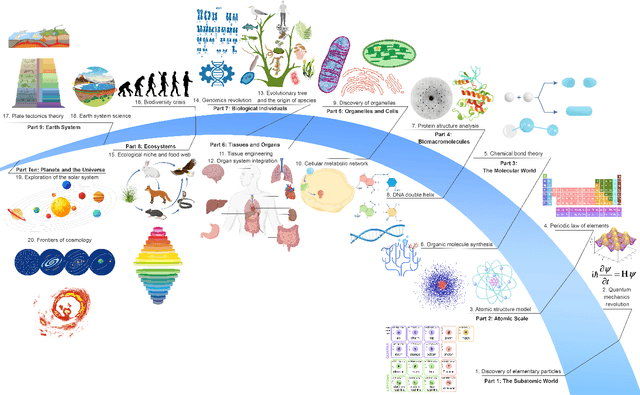
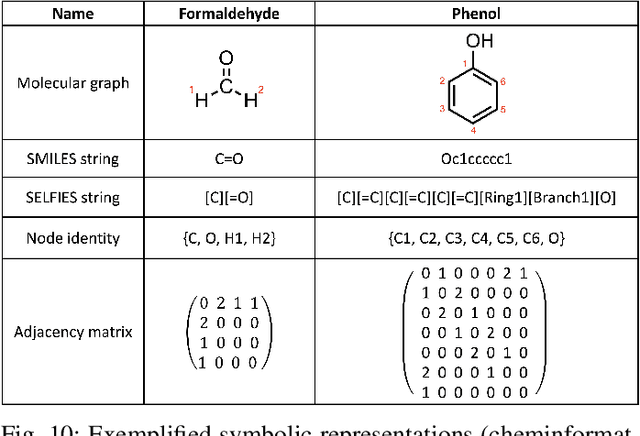
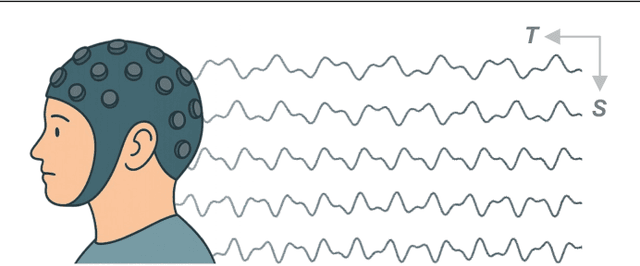
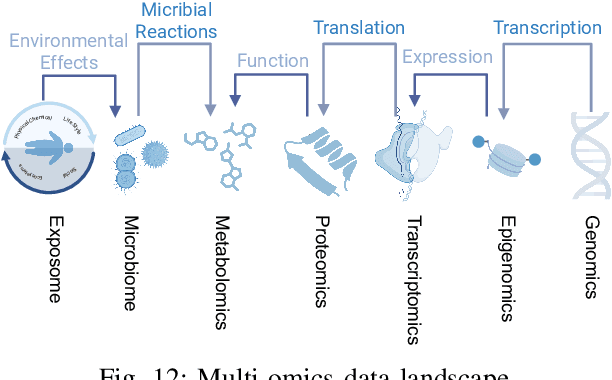
Scientific Large Language Models (Sci-LLMs) are transforming how knowledge is represented, integrated, and applied in scientific research, yet their progress is shaped by the complex nature of scientific data. This survey presents a comprehensive, data-centric synthesis that reframes the development of Sci-LLMs as a co-evolution between models and their underlying data substrate. We formulate a unified taxonomy of scientific data and a hierarchical model of scientific knowledge, emphasizing the multimodal, cross-scale, and domain-specific challenges that differentiate scientific corpora from general natural language processing datasets. We systematically review recent Sci-LLMs, from general-purpose foundations to specialized models across diverse scientific disciplines, alongside an extensive analysis of over 270 pre-/post-training datasets, showing why Sci-LLMs pose distinct demands -- heterogeneous, multi-scale, uncertainty-laden corpora that require representations preserving domain invariance and enabling cross-modal reasoning. On evaluation, we examine over 190 benchmark datasets and trace a shift from static exams toward process- and discovery-oriented assessments with advanced evaluation protocols. These data-centric analyses highlight persistent issues in scientific data development and discuss emerging solutions involving semi-automated annotation pipelines and expert validation. Finally, we outline a paradigm shift toward closed-loop systems where autonomous agents based on Sci-LLMs actively experiment, validate, and contribute to a living, evolving knowledge base. Collectively, this work provides a roadmap for building trustworthy, continually evolving artificial intelligence (AI) systems that function as a true partner in accelerating scientific discovery.
S2-UniSeg: Fast Universal Agglomerative Pooling for Scalable Segment Anything without Supervision
Aug 09, 2025Recent self-supervised image segmentation models have achieved promising performance on semantic segmentation and class-agnostic instance segmentation. However, their pretraining schedule is multi-stage, requiring a time-consuming pseudo-masks generation process between each training epoch. This time-consuming offline process not only makes it difficult to scale with training dataset size, but also leads to sub-optimal solutions due to its discontinuous optimization routine. To solve these, we first present a novel pseudo-mask algorithm, Fast Universal Agglomerative Pooling (UniAP). Each layer of UniAP can identify groups of similar nodes in parallel, allowing to generate both semantic-level and instance-level and multi-granular pseudo-masks within ens of milliseconds for one image. Based on the fast UniAP, we propose the Scalable Self-Supervised Universal Segmentation (S2-UniSeg), which employs a student and a momentum teacher for continuous pretraining. A novel segmentation-oriented pretext task, Query-wise Self-Distillation (QuerySD), is proposed to pretrain S2-UniSeg to learn the local-to-global correspondences. Under the same setting, S2-UniSeg outperforms the SOTA UnSAM model, achieving notable improvements of AP+6.9 on COCO, AR+11.1 on UVO, PixelAcc+4.5 on COCOStuff-27, RQ+8.0 on Cityscapes. After scaling up to a larger 2M-image subset of SA-1B, S2-UniSeg further achieves performance gains on all four benchmarks. Our code and pretrained models are available at https://github.com/bio-mlhui/S2-UniSeg